

Basement Drywall Installation in St. Albert, AB
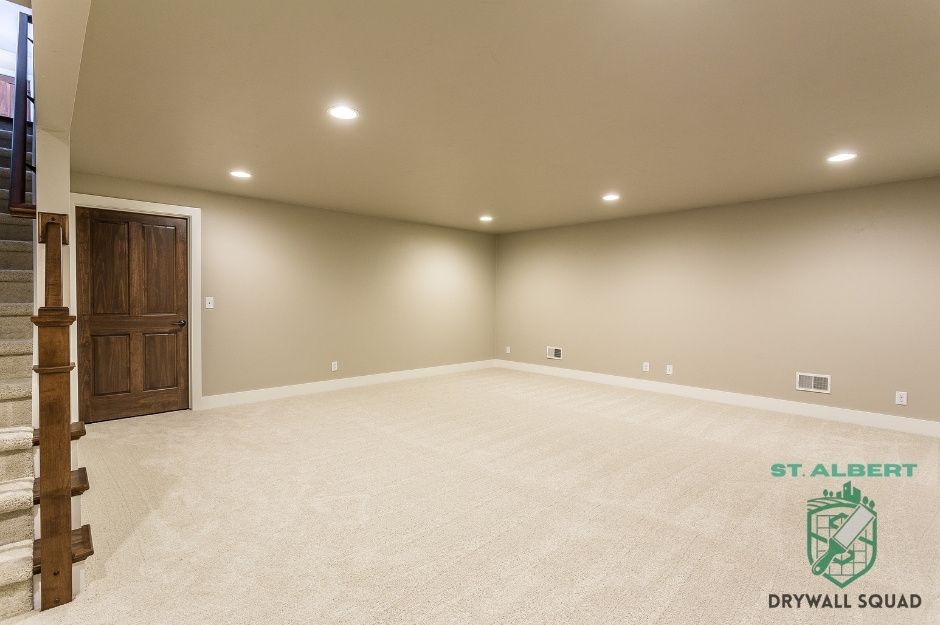
St. Albert Drywall Squad delivers dependable basement drywall installation services for homeowners across St. Albert, AB, handling everything from full drywall framing to high-performance wall and drywall ceiling systems. Our team understands the demands of below-grade construction and installs each component with precision so your finished basement feels solid, comfortable, and built to last.
Basement projects rely on skill, proper planning, and the right materials. Our installers use straight framing layouts, moisture-resistant boards, corner bead, T-squares, and screw guns to ensure clean lines and durable structure. We also integrate insulation, vapour barriers, sound-control assemblies, and fire-rated systems where required—bringing both technical accuracy and a human touch to every buildout.
If you’re planning a rec room, home office, or a complete basement suite, our crew is ready to help. Call 587-854-3775 or fill out the online form to get started with your basement installation in St. Albert.
St. Albert Drywall Squad (SP)
Comprehensive Basement drywall Installation Services in St. Albert
St. Albert Drywall Squad delivers complete basement installation solutions that transform your unfinished space into functional living areas. Our specialized services include structural framing, moisture control systems, and professional drywall installation designed for basement environments.
Framing and Board Install
Your basement installation begins with precise framing that creates the structural foundation for walls and ceilings. We construct metal or wood frame systems that accommodate electrical, plumbing, and HVAC components while ensuring proper spacing for insulation.
Our board installation process uses moisture-resistant drywall specifically designed for basement applications. This specialized material prevents mold growth and maintains structural integrity in humid conditions.
We install fire-rated assemblies where required by local building codes. These systems provide essential safety protection between living spaces and mechanical areas.
Soundproof walls and ceilings receive additional attention during installation. We use acoustic-rated materials and specialized techniques to minimize sound transfer between basement spaces and upper floors.
Insulation and Board Install
Proper insulation installation creates thermal barriers that improve energy efficiency and comfort in your finished basement. We install batt or rigid foam insulation between framing members before applying drywall.
Your insulation system works with vapor barriers to prevent condensation within wall cavities. This combination protects against moisture damage and maintains indoor air quality.
We coordinate insulation placement with electrical and plumbing rough-ins. This ensures complete coverage without gaps that could reduce thermal performance.
Board installation over insulation requires careful attention to fastener placement and joint alignment. Our installation techniques prevent thermal bridging while creating smooth surfaces for finishing.
Vapor Barrier Preparation
Vapor barrier systems control moisture movement through basement walls and prevent condensation problems. We install polyethylene sheeting or specialized membrane materials according to local building requirements.
Your vapor barrier installation requires precise sealing at joints, penetrations, and edges. We use appropriate tapes and sealants to create continuous moisture protection.
Proper placement of vapor barriers depends on your climate zone and wall assembly design. We position these materials on the warm side of insulation to prevent condensation within wall cavities.
Electrical and plumbing penetrations receive special attention during installation. We seal around these openings to maintain barrier continuity without compromising system performance.
Basement Suite Buildout
Complete basement suite construction involves coordinating multiple trades and building systems. We frame partition walls, install ceilings, and prepare surfaces for electrical and plumbing installations.
Your suite buildout includes rec room walls, utility room walls, and stairwell board install as needed. Each area receives appropriate materials and installation techniques based on intended use.
We install soundproof assemblies between suite areas and existing living spaces. These systems ensure privacy and comfort for both basement and main floor occupants.
Finished basement preparation includes priming and texture application where specified. Our installation creates smooth, even surfaces ready for paint or other finish materials.
Basement Walls and Ceilings: Construction and Finishing
Proper construction and finishing of basement walls and ceilings requires specialized materials and techniques to address moisture, insulation, and fire safety requirements. Each area serves different purposes and demands specific approaches for optimal performance.
Basement Walls
Your basement walls need moisture-resistant materials and proper vapor barrier installation to prevent mold growth and structural damage. Moisture-resistant drywall boards offer superior protection compared to standard drywall in below-grade environments.
The construction process begins with framing installation using metal or treated lumber studs. Insulation fills the cavities between studs to improve energy efficiency and comfort. A plastic vapor barrier prevents moisture penetration before drywall installation.
Fire-rated assemblies may be required depending on local building codes and proximity to utilities. These assemblies use specific board types and installation methods to achieve required fire resistance ratings.
Soundproof wall construction involves adding acoustic insulation and specialized drywall products. Double-layer board installation with staggered seams reduces sound transmission between rooms.
Your finished walls require proper joint compound application and sanding for smooth surfaces. Prime and paint application completes the installation process.
Basement Ceilings
Basement ceiling installation addresses fire safety, sound control, and access to utilities above. Fire-rated ceiling assemblies protect the structure above while maintaining access panels for mechanical systems.
Standard ceiling height ranges from 7 to 8 feet after framing and drywall installation. Lower ceilings may require specialized techniques to maximize headroom while meeting code requirements.
Soundproof ceiling construction uses resilient channels or sound isolation clips to decouple the ceiling from floor joists above. Acoustic insulation between joists reduces impact and airborne sound transmission.
Moisture control remains important even for ceilings. Vapor barriers prevent condensation issues that could lead to mold growth or ceiling damage.
Recessed lighting and ventilation fans require coordination during framing. Electrical rough-in occurs before insulation and board install phases.
Rec Room Walls
Recreation room walls require durable finishes that withstand higher activity levels and potential impacts. Multiple layers of drywall or impact-resistant boards provide better damage resistance than single-layer installations.
Electrical planning includes adequate outlets for entertainment systems and lighting controls. Framing modifications accommodate built-in storage or entertainment centers during the construction phase.
Insulation levels may be higher than standard basement areas to improve comfort for extended use. Sound control prevents noise transfer to other areas of your home.
Corner protection and chair rail installation protect high-traffic areas from damage. Textured finishes or wainscoting add visual interest while providing practical benefits.
Utility Room Walls
Utility room walls prioritize access to mechanical systems while providing fire protection and moisture resistance. Fire-rated assemblies are typically required around furnaces, water heaters, and electrical panels.
Removable access panels allow maintenance of plumbing, electrical, and HVAC systems behind walls. These panels maintain fire ratings while providing necessary access.
Moisture-resistant materials handle humidity from water heaters, washers, and other equipment. Proper ventilation reduces condensation and maintains air quality.
Wall protection around utility connections prevents damage during maintenance activities. Reinforced framing supports heavy equipment mounting when required.
Specialty Installations: Durable and Safe Solutions
St. Albert basement installations require specialized materials and techniques to handle moisture, sound transmission, and fire safety requirements. Professional installation ensures long-term performance and compliance with building codes.
Moisture-Resistant Board
Moisture-resistant drywall provides essential protection in basement environments where humidity levels fluctuate. These specialized boards feature enhanced core composition that resists water absorption and prevents degradation over time.
Green board and purple board offer different moisture resistance levels. Green board works well in moderate moisture areas, while purple board provides superior protection in high-humidity zones like utility rooms.
Proper installation techniques include:
- Sealing edges with appropriate compounds
- Maintaining gaps at floor and ceiling joints
- Using moisture-resistant fasteners
The enhanced durability prevents common issues like board sagging, mold growth, and surface deterioration. Professional installers ensure proper vapor barrier coordination with moisture-resistant boards for complete basement protection.
Soundproof Walls
Soundproof wall systems reduce noise transmission between basement spaces and upper floors. These assemblies use specialized materials and construction techniques to achieve higher Sound Transmission Class (STC) ratings.
Double-wall construction with staggered studs eliminates direct sound paths. Mass-loaded vinyl adds density without increasing wall thickness significantly.
Key components include:
- Resilient channels that decouple drywall from framing
- Acoustic insulation filling wall cavities
- Multiple drywall layers with offset seams
Professional installation ensures proper assembly alignment and sealing. Experienced installers understand how electrical outlets, HVAC penetrations, and other openings can compromise acoustic performance when not properly addressed.
Soundproof Ceilings
Soundproof ceiling installations minimize impact and airborne noise transfer to living spaces above. These systems require precise installation to maintain structural integrity while maximizing acoustic performance.
Resilient hat channel systems provide effective sound isolation. The channels attach to ceiling joists and support drywall layers without direct contact to the structure above.
Installation considerations include:
- Proper channel spacing for drywall support
- Acoustic caulking at perimeter joints
- Heavy-duty fasteners rated for ceiling loads
Mass-loaded barriers can be integrated between ceiling layers for enhanced performance. Professional installers coordinate with electrical and HVAC rough-in work to prevent acoustic bridging through ceiling penetrations.
Fire-Rated Assemblies
Fire-rated wall and ceiling assemblies provide required fire separation in basement suite buildouts and multi-family applications. These systems must meet specific fire resistance ratings established by building codes.
Type X drywall forms the foundation of most fire-rated assemblies. These boards contain glass fiber reinforcement and other additives that improve fire resistance performance.
Assembly requirements typically include:
- Specific board thickness (5/8" for most applications)
- Particular screw patterns and fastener types
- Fire-rated joint compound and tape systems
Professional installation ensures compliance with tested assembly configurations. Installers maintain detailed documentation of materials and methods used to verify code compliance during inspections.
Detail-Oriented Basement Finishing and Renovation
Professional basement finishing requires precise execution across multiple stages, from structural framing to final board installation. Each component demands specific techniques to ensure moisture resistance, structural integrity, and long-term durability in St. Albert's climate conditions.
Stairwell Board Install
Stairwell drywall installation presents unique challenges due to angular cuts and confined spaces. You need precise measurements for each board section to accommodate the stair stringers and varying ceiling heights.
Critical installation steps include:
- Pre-cutting boards to match stair angles
- Installing backing support where needed
- Securing panels with appropriate fasteners every 16 inches
The confined workspace requires careful planning for board positioning. You must account for electrical boxes, light switches, and handrail mounting points during the installation process.
Proper joint finishing becomes essential in stairwells since imperfections are highly visible. Multiple coats of compound ensure smooth transitions between angled cuts and standard wall sections.
Basement Renovation Framing
Basement framing establishes the foundation for all subsequent drywall installation work. You need moisture-resistant materials and proper spacing to support both insulation and board attachment points.
Standard framing specifications:
- 2x4 studs at 16-inch centers
- Pressure-treated bottom plates on concrete
- Proper header installation for doorways
- Electrical and plumbing rough-in coordination
Moisture control starts at the framing stage. You must install vapor barriers correctly and ensure adequate ventilation pathways remain accessible.
Fire-rated assemblies require specific framing techniques when separating basement suites from main living areas. This includes proper blocking and attachment methods for code compliance.
Finished Basements
Finished basement spaces require comprehensive drywall systems that address moisture, sound transmission, and fire safety requirements. You achieve professional results through systematic installation of moisture-resistant boards and proper joint treatment.
Key finishing elements:
- Moisture-resistant board on exterior walls
- Soundproof assemblies between living spaces
- Fire-rated construction for suite separations
- Proper insulation integration
Rec room and utility room installations demand different approaches. Utility areas need accessible panels for mechanical systems, while recreation spaces require seamless finishes.
Your basement suite buildout must meet municipal codes for ceiling heights, egress windows, and fire separation requirements. Each room type has specific board thickness and attachment specifications that ensure both safety and performance standards.