

Professional Ceiling Installation in St. Albert, AB
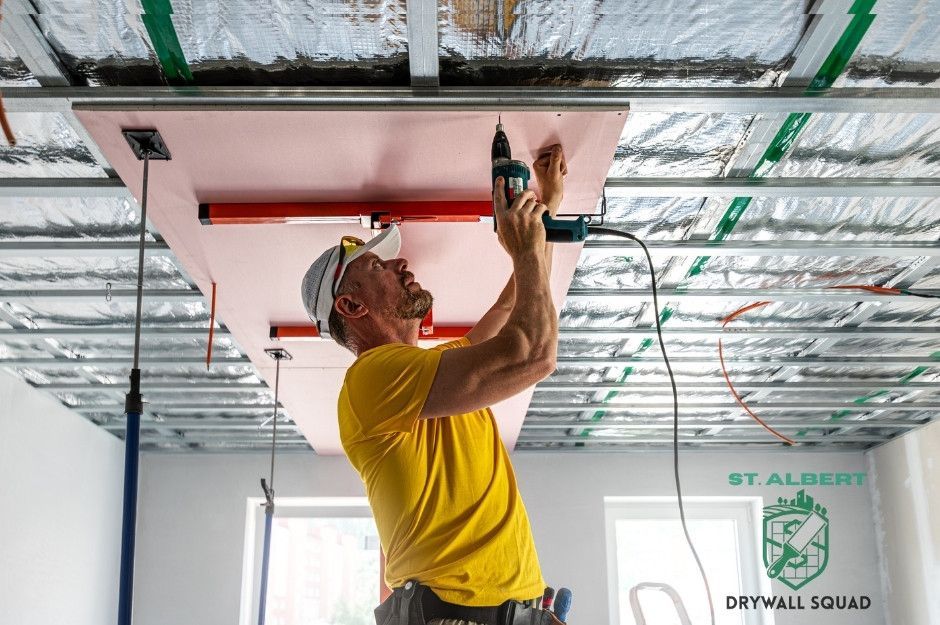
A properly built ceiling does far more than close off a room—it supports lighting and HVAC systems, improves acoustics, and enhances the overall appearance and value of your space. When St. Albert homeowners and businesses need reliable, high-quality ceiling installation, St. Albert Drywall Squad provides complete solutions for everything from standard drywall ceilings to advanced acoustic, basement, and commercial ceiling systems.
Our team handles full-scale ceiling construction, board hanging, framing, acoustic tile installation, and fire-rated assemblies, bringing both technical precision and industry-standard safety practices to every project. With the right materials, fastening patterns, and support systems, we ensure your ceiling remains durable, code-compliant, and visually seamless.
Whether you’re finishing a basement, upgrading a commercial space, or building a new home, St. Albert Drywall Squad delivers professional ceiling installations tailored to your needs.
For service or an estimate, call 587-854-3775—your trusted ceiling specialists in St. Albert, AB.

Ceiling Installation Services in St. Albert
Professional ceiling installation requires proper framing, precise board hanging, and systematic assembly techniques. St. Albert properties benefit from specialized drywall services that address structural requirements and finishing standards.
Drywall Ceiling Install and Board Hanging
Drywall ceiling install involves mounting gypsum boards to ceiling joists or furring strips using specific fastening patterns. You need proper spacing between screws to prevent sagging and ensure structural integrity.
The ceiling hanging service begins with measuring and cutting boards to fit your room dimensions. Professional installers mark joist locations and use appropriate fasteners for your ceiling type.
Ceiling board installation requires:
- T-bar supports during installation
- Proper screw placement every 12 inches on joists
- Staggered joint patterns to minimize cracking
- Moisture-resistant boards in humid areas
Your hang sheetrock process involves lifting panels into position and securing them systematically. This prevents gaps and maintains consistent board alignment across the entire ceiling surface.
Ceiling Framing and Panel Installation
Ceiling framing and board work establishes the structural foundation for your new ceiling. Metal or wood framing creates the framework that supports drywall panels and accommodates insulation requirements.
Ceiling panel installation involves fitting individual sections together while maintaining proper joint spacing. You achieve optimal results when panels align with framing members and room dimensions.
Ceiling system installation includes:
- Load calculations for framing requirements
- Electrical and HVAC coordination
- Insulation placement between joists
- Fire-rated materials for code compliance
Your framing determines ceiling height and accommodates mechanical systems. Professional drywall experts ensure proper spacing and structural adequacy for long-term performance.
New Ceiling Construction and Assembly
New ceiling construction encompasses complete ceiling systems from framing to finish application. Your project requires coordination between structural elements and finish materials.
Interior ceiling assembly follows systematic installation procedures. You start with framing inspection, proceed to drywall installation, and complete with joint treatment and surface preparation.
Construction phases include:
- Structural framing installation
- Utility rough-in coordination
- Drywall services application
- Joint compound and tape application
Your ceiling system installation must meet building codes and performance standards. Professional installation ensures proper attachment methods and materials suitable for your specific application requirements.
Specialty Ceiling Solutions
St. Albert Drywall Squad delivers specialized ceiling installation services for unique project requirements including basement transformations, commercial spaces, and renovation challenges. These advanced installations require specific expertise in acoustic treatments, fire-rated systems, and high-reach applications.
Basement and Commercial Ceiling Installation
Basement ceiling installation transforms unfinished spaces into functional living areas. Your basement requires moisture-resistant materials and proper insulation to prevent condensation issues. Drop ceilings work well for concealing mechanical systems while maintaining access for future repairs.
Commercial ceiling installation demands adherence to building codes and safety regulations. Your business space needs durable materials that withstand high traffic and meet fire safety requirements. Commercial projects often involve larger spans and specialized grid systems.
Commercial drywall services include suspended ceiling systems, tile installations, and integrated lighting solutions. Your project timeline matters in commercial settings, so professional installation minimizes business disruption. Commercial drywall applications require coordination with other trades for seamless integration.
Acoustic and Fire-Rated Ceiling Install
Acoustic ceiling installation reduces noise transmission between floors and rooms. Your space benefits from specialized tiles and insulation materials that absorb sound waves effectively. These systems work particularly well in offices, restaurants, and multi-family buildings.
Fire-rated ceiling install provides essential safety protection through tested assemblies. Your building code requirements determine the specific fire rating needed for your space. These installations use specialized materials and techniques to achieve proper fire resistance ratings.
Drywall finishing services ensure smooth surfaces and proper joint treatment for both acoustic and fire-rated applications. Your ceiling's performance depends on correct installation and finishing techniques. Professional application guarantees compliance with manufacturer specifications and local codes.
High-Reach and Renovation Ceiling Projects
High-reach ceiling install requires specialized equipment and safety protocols for tall spaces. Your cathedral ceilings, atriums, or commercial spaces need experienced technicians with proper scaffolding and lift equipment. Safety procedures become critical at elevated heights.
Ceiling renovation install involves removing existing materials and installing new systems. Your renovation project may require structural modifications or updated framing before new ceiling installation. Dust containment and debris removal protect your finished spaces during construction.
Renovation work often reveals hidden issues like outdated wiring or plumbing that need addressing. Your project timeline adjusts based on these discoveries and necessary corrections. Professional assessment identifies potential challenges before installation begins.
Finishing, Repairs, and Enhancements
Professional ceiling installation extends beyond the initial setup to include comprehensive finishing work, targeted repairs, and aesthetic enhancements. These services ensure your ceiling maintains structural integrity while achieving the desired visual appeal for residential and commercial spaces.
Drywall Repair and Ceiling Crack Repair
Common ceiling damage requires prompt attention to prevent further deterioration. Cracks often develop from settling, temperature changes, or moisture exposure.
Small hairline cracks need mesh tape and compound application for proper reinforcement. Larger structural cracks may require professional assessment to determine underlying causes.
Hole repairs vary in complexity depending on size:
Hole Size Repair Method Materials Needed
Small (nail holes) Spackling compound Basic filler, putty knife
Medium (1-3 inches) Patch kit application Self-adhesive patches, compound
Large (3+ inches) Cut and replace section New drywall, tape, screws
Water damage creates unique challenges. You need immediate moisture source elimination before repairs begin. Stained areas require primer-sealer application to prevent bleed-through.
Drywall removal becomes necessary when damage extends beyond surface level. Professional contractors assess whether partial or complete panel replacement offers the most cost-effective solution.
Taping, Mudding, and Plastering for Ceilings
Drywall taping forms the foundation of smooth ceiling surfaces. Paper tape provides maximum strength for joints, while mesh tape offers easier application for repairs.
The three-coat mudding process ensures professional results. Base coat covers tape and screw heads. Second coat feathers edges wider for seamless transitions.
Finish coat application requires careful attention to lighting angles. Overhead lighting reveals imperfections more readily than wall surfaces, demanding precise technique.
Drywall mudding techniques vary by ceiling type:
- Smooth ceilings need level 5 finish for paint-ready surfaces
- Textured applications allow level 4 completion before texture application
- Basement ceiling installation often uses level 3 finish under tiles
Plastering services address older homes with lath-and-plaster construction. Repair work matches existing textures and thickness levels. New plaster application over drywall creates premium smooth finishes.
Proper drying time between coats prevents cracking and ensures durability. Professional contractors adjust schedules based on humidity and temperature conditions.
Painting and Texturing Services
Interior painting services complete the ceiling installation process. Primer selection depends on surface material and final finish requirements.
Ceiling-specific paint formulations resist yellowing and provide better coverage. Flat finishes hide minor imperfections while semi-gloss options suit high-humidity areas.
Texture applications add visual interest and conceal surface variations:
- Knockdown ceiling texture creates subtle patterns through spray and knock-down technique
- Orange peel texture provides light stippling effect popular in modern homes
- Popcorn ceiling removal eliminates outdated textures for contemporary smooth finishes
Professional painting equipment ensures even coverage across large ceiling surfaces. Airless sprayers deliver consistent results faster than roller application.
Color selection impacts room perception. Light colors reflect more light and create spacious feelings. Darker shades can lower visual ceiling height but add dramatic effect.
Multiple coat application builds proper film thickness for durability. Cut-in work around fixtures and edges requires steady hand techniques that professional painters master through experience.